Blogs

Ways to work on yourself
Career Skills

Ways to work on yourself

Ways to work on yourself We are always thriving to work on ourselves. There is no one technique to go about improving oneself; it is a constant process. However, there are a few tactics worth noting that will undoubtedly aid in your success. So, in this article, we’ll look at 10 things you can do to get your quest for self-improvement started. Let’s first examine the benefits when you work on yourself and how doing so might enhance your life. You might want to read: Which skills are important in the workplace? Why Should You Improve and Work on Yourself? Knowing how to work on oneself is essential if you want to survive in a world that demands ongoing adaptability. Since civilization will continue to advance and change whether you’re stationary or moving, if you merely preserve the abilities you already possess, you will quickly become obsolete. Perhaps you want to broaden your knowledge, kick bad or unhealthy habits, work faster, control your emotions, or feel more fulfilled in life. Each time you improve one component of yourself, your sense of overall contentment will increase. Improving yourself can have a good impact on every area of your life. You might want to read Here’s Why Networking Is Important for your Success – AESN You might feel more confident in yourself and more optimistic about the future by realizing that you can change. You’ll understand that your achievement rests solely on your own efforts rather than the deeds of others when you feel in control of your talents. Here are ten ways to work on yourself: 1. Raise Your Standards What you deem to be acceptable or “good enough” for you depends on your standards. They establish the standards by which you are judged. What is the absolute minimum that you will accept in any area of your life? Your personal behavior should be the benchmark that matters the most to you. Will you put up with missing another deadline? Betraying a friend? letting someone treat you disrespectfully? By setting higher expectations for your own conduct, you can improve yourself. Read: 5 Ways to Earn Side Income – AESN When your standards are too low, you won’t feel the pressure to work on yourself or your performance. Because their standards are too low, a lot of people who accept less money or a higher number on the scale than what they consider ideal find themselves in a rut. 2. Use constructive self-talk You’re more likely to develop confidence, self-esteem, and control over your life if you regularly use positive self-talk. It’s simple to be critical of who you are and your perceived flaws. However, this unproductive self-talk can make you less motivated to get better. It will be challenging to find the motivation to take steps toward self-improvement if you’re continuously telling yourself that you’re not good enough since you won’t think it’s feasible. Read: 5 Ways to Earn Side Income – AESN It’s critical to recognize negative self-talk so you can consciously swap it out for a more optimistic outlook. You’re more likely to develop confidence, self-esteem, and a sense of control over your life by engaging in positive self-talk, which will support your goal-achieving. 3. Discover something fresh Learning new things is a great way to keep life interesting and consistently improve yourself. Doing the same thing day in and day out gets dull and might lower your motivation to succeed. You may constantly continue to advance in all facets of your life by learning new things. Go through Before You Quit Your Job, Ask Yourself These Questions – AESN Learning new things can help you feel more valuable and improve your quality of life because humans have a natural desire to explore and progress. Consider the concepts that interest you and take the initiative to learn more about them. 4. Be Surrounded by Positive People We live in a world that is always focused on negativity, which is one of the biggest obstacles to keeping positive. There are a lot of terrible occurrences and negative people in the news, on social media, in gossip circles, and in everyday life. Also go through Is Higher Salary Worth Relocating? – AESN Finally, you can undervalue the significance of your social circle. To better yourself, you must surround yourself with positive people. Your mental outlook is greatly influenced by those who are around you. It is simpler to keep motivated and focused on your goals when you are surrounded by good influences, which will ultimately make you feel better about yourself. 5. Consider Your Routines Everyone has a terrible habit of some kind, whether it be smoking or biting your nails, which can prevent you from reaching your objectives. While we like to categorize habits into “good” and “bad,” habits actually exist on a spectrum and are influenced by a person’s capacity for self-control. Also read: 7 Tips to Manage Your LinkedIn Profile Examine the daily activities you engage in. Habits may be incredibly challenging to change, especially once your brain has become wired for them via repeated practice. You can find out which of your habits can be preventing you from moving forward and which ones are useful and add to your life by studying them. 6. Practice Self-Care Self-care entails setting aside time to engage in activities that enhance your physical and emotional well-being. When it comes to taking care of oneself, self-care can improve your ability to manage stress, reduce your chance of being ill, and boost your energy. Self-care entails setting aside time to engage in activities that enhance your physical and emotional well-being. In many ways, practicing self-care lays the groundwork for self-improvement. Also read: How to improve career progression? You are more likely to focus your energy on improving yourself when you take care of yourself. 7. Make a Regular Workout Schedule Regular physical activity can enhance your health and provide you a higher quality of life. By allowing you to unwind and clear your mind, exercising can also help you be

How to learn writing skills
Career Skills

How to learn writing skills

How to learn writing skills The learning process never stops for authors. There’s always something new we can learn whether it’s new writing skills or a tool. Grammar, spelling, punctuation, sentence structure, and other fundamental writing abilities are things we work to perfect, and we also research our form (fiction, nonfiction, or poetry) and genre (romance, suspense, fantasy, etc.). For instance, in addition to mastering the fundamentals of writing, storytellers must also learn the plot, characterization, setting, dialogue, and other components of stories. Also read: How skills affect career choice? It can seem overpowering at times. It can be challenging to know where to begin and how to maintain learning over the long term because there is so much to learn and so many different ways to learn it. Despite the fact that people are writing for years, they are constantly picking up new writing ideas. How to Improve Your Writing? The following advice provides some methods to learn writing skills with an emphasis on lifelong learning. 1. Read As long as the book you’re reading is well written and especially if you pause to research questions that come up while you’re reading, you will organically learn writing skills through reading (such as looking up a word in the dictionary). Although listening to audiobooks won’t help you learn fundamental writing abilities like grammar, spelling, and punctuation, they are a great way to learn about form and genre. Also read: How to improve career progression? 2. Keep accessible fundamental writing tools When we were younger, carrying a dictionary was impossible. In the past, we were unable to travel with a glossary, thesaurus, set of encyclopedias, and books on the art of writing. But now that smartphones have been developed, all of these tools may fit in a pocket or a purse. Even though people still prefer paperbacks for craft books, having quick and convenient access to a dictionary and thesaurus on a smartphone has been quite helpful. When a question arises, make sure you research it and memorize the answer. 3. Attend a workshop or class Ideally, you can find a course in a recognized university or community college in your neighborhood or online. Classes and courses can also be found in local bookstores, community centers, and libraries. Additionally, there are a lot of online courses available. Ensure that any course you enroll in is being offered by a reputable source. Also read: 7 Tips to Manage Your LinkedIn Profile 4. Books Among your most crucial tools will be books on the subject. We’ve discovered that books on the craft are the most practical, educational, and enlightening study materials, other than reading and taking classes. You can get broad books on writing and creativity as well as books on particular forms, genres, and writing elements (like plot, characterization, etc.). We think you can never have too many of these! 5. Develop the practice of taking notes. Maintaining thorough notes on your queries and the ideas you’re learning while reading a book, a poem, or a style manual will help you retain new knowledge and abilities while also creating a record that you may consult at any time. Also go through Is Higher Salary Worth Relocating? – AESN 6. Interviews Author interviews have given me a great deal of knowledge about all aspects of writing, from the process of coming up with a writing idea to the process of publishing and marketing a writing project. Anyone who is eager to learn from authors can benefit greatly from their practical, hands-on experience. We strongly advise looking for author interviews, especially from your favorite authors, whether you read, watch, or listen. Go through Before You Quit Your Job, Ask Yourself These Questions – AESN 7. Subscribe These days, many subscriptions are free (like Writing Forward!). Search for blogs and podcasts that are frequently updated and accommodate your schedule. To be sure you’re getting reliable information, be sure to examine the source’s legitimacy. So, to learn good writing skills, you must be involved in different channels. Read: 5 Ways to Earn Side Income – AESN 8. Work with a writing tutor You can gain a lot from a writing coach if you’re further along in your writing and getting ready to submit or publish a significant project, like a novel, and it fits within your budget. While attentively leading you to make major improvements to your project and your writing overall, a competent coach will help you keep your creative vision. Read: 5 Ways to Earn Side Income – AESN 9. Learn from editors In a similar vein, an editor may teach you a lot. Once more, this is mainly geared at authors who are close to publication or submission. A developmental editor will examine the text’s content and organization. A developmental editor will examine your project’s content and organization and offer comments on elements like story, character, and pacing. Grammar, spelling, punctuation, and sentence structure will all be reviewed by a copy editor. You’ll immediately identify the errors you commit time and time again in your writing and be able to stop doing them in the future. You might want to read Here’s Why Networking Is Important for your Success – AESN 10. Practice your craft constantly Regardless of what you are learning, practice is crucial. Even if you can only spend a page or a half-hour on your practice each day, try to write anything. Scheduling learning time is an excellent approach to make sure that you’re continually improving your abilities. You don’t have to set aside a lot of time to continue learning how to write. For instance, each episode of the Grammar Girl podcast lasts only five minutes. One podcast can be listened to daily or once a week. You might want to read: Which skills are important in the workplace? You can resolve to read three craft books each year. Every little amount helps, even if you’re just learning, and many writers remember knowledge better when it’s consumed in smaller chunks. Also read: How to excel in an interview
How to develop leadership skills
Career Skills

How to develop leadership skills

How to develop leadership skills In most professions and educational settings, leadership abilities are highly valued. It is quite simple to understand why. A good leader is extremely hard to come by; someone who can accomplish a task well. In addition to that, he should also be inspiring and motivating those around them. Many people would rather follow when it is possible rather than assume leadership roles. It is because they just lack interest in doing so. Others aspire to be leaders but are unwilling to put in the effort necessary to practice and reflect on their own performance. This means that if you have a chance to develop leadership skills and a drive to advance your career, you will be an invaluable asset to a company. There are many different ways to lead. You could desire to lead the debating society or the football squad at your school. Or perhaps politics or activism are your interests. Or perhaps you have your heart set on a managerial position when you start working, with the goal of rising to the position of CEO as quickly as possible. This article looks at how you can develop your leadership skills no matter what your goals may be. Also read: How to improve career progression? Provide yourself with practice chances You are not be very interested in extracurricular activities, but you want to hold leadership positions in the future. For this, there are the greatest method to show off your leadership skills and hone them in a setting that is low-risk. In order to develop a leadership skills, you should start being practical. Leaders position in extracurricular activities is frequently quite simple because there aren’t many people who desire to take on leadership roles in the first place. Additionally, it is a setting that is fairly forgiving of mistakes. But it’s in these situations that you’ll learn how to cope with managing individuals who could hold divergent viewpoints and test your ability to persuade them to cooperate so that your team performs better than the sum of its individual parts. Also read: 7 Tips to Manage Your LinkedIn Profile Receive candid criticism The challenge with playing a crucial role in school extracurricular activities is that if you’re doing a decent job, others can be reluctant to criticize you out of concern that they’ll discourage you. It’s terrible because receiving constructive criticism is essential to developing your leadership abilities. You might get 360-degree feedback at work, which entails comments from your manager, your peers, and anyone beneath you in the hierarchy. Although it’s doubtful that your extracurricular activity will involve anything this complex, you can create your own version by asking a few individuals you respect for their input. If it doesn’t work, think about requesting anonymous comments using a tool like a Google form. Or, if a teacher is participating in the activity—for example, a PE instructor working with the school hockey team—you might ask them what they thought of your performance. Wherever you can, try to get feedback that can be put to use. Also read: How skills affect career choice? Improve your ability to follow. Nobody always acts as the leader. You might be the captain of the school chess team. But you have a chorus role in theater club. That means, you may be a leader in one situation but a follower in another. And it is true throughout life; for example, boards of shareholders have authority over CEOs. However, you can improve your leadership abilities even when you are a follower. Learn from those leaders first; what are they doing well or incorrectly? And what would you change? The opportunity to improve as a follower, though, is more significant than these things. Think about what a leader would want a follower to be doing based on your own leadership experience, and then really execute it. Also go through Is Higher Salary Worth Relocating? – AESN Consider your team’s potential. Developing your team to the fullest extent of their abilities is one of the most important responsibilities of a leader. Although it may seem obvious, this is a leadership trait that is easily overlooked in the day-to-day activities. Any leader’s ultimate goal is to have a replacement in place who will make sure that all of their efforts don’t go to waste. That’s crucial in a school setting where you are aware that the role won’t be one you play for very long. So, if you think anyone on your team would be capable of stepping up and taking your place, encourage them to develop their leadership abilities and provide them chances to do so. Go through Before You Quit Your Job, Ask Yourself These Questions – AESN Establish definite, attainable goals As a leader, it is your responsibility to promote everyone else’s growth while maintaining your own. Setting yourself measurable, attainable goals is one technique to gauge your personal improvement in addition to receiving and acting upon feedback. Finding a mechanism to assess your leadership effectiveness independently of the effectiveness of the team as a whole is also a smart idea. What you want to accomplish will determine the type of metric you employ. Whatever metric you choose, make sure your goals are attainable, and ideally choose goals that will let you track your development over time. This is one of the most crucial leadership skills you should develop. Read: 5 Ways to Earn Side Income – AESN Don’t focus too much on personality assessments It may be suggested to you that you employ personality assessments to improve your leadership skills. Many lack scientific rigor or are acceptable in one cultural context but not in another. They will therefore draw erroneous conclusions as a result. Even those that are based on sound science can lead you astray. For instance, it’s usually advisable to trust your own judgment and disregard the quiz. And, if someone tells you that you should use a certain leadership style because you’re an introvert even though another style has been serving
Which skills are important in critical thinking?
Career Skills

Which skills are important in critical thinking?

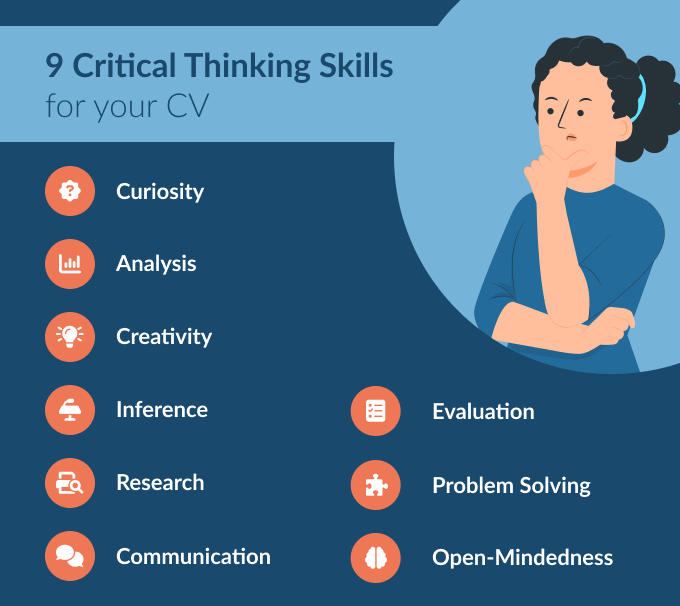
Which skills are important in critical thinking? You can understand and respond to events using all the facts and information at your disposal if you have the ability to think critically. To define an issue and create workable answers, critical thinking at work typically entails digesting and arranging facts, statistics, and other information. Think about the critical thinking skills you already have and those you might want to work on developing so you can emphasize them in interviews and on your CV. Additionally, you can think about making goals and adopting routines to support your development of the critical thinking abilities required for professional success. In this article today, we define critical thinking, discuss its value, and offer tips for honing your critical thinking skills. Also read: How skills affect career choice? Critical thinking: What is it? Analyzing information to fully comprehend an issue or topic is the act of critical thinking. The steps of the critical thinking process often entail gathering facts and data, posing deliberate queries, and examining potential answers. For instance, if you work in human resources and must settle a dispute between two workers, you will utilize critical thinking to determine the nature of the dispute and the appropriate course of action. Also read: How to improve career progression? Why it’s necessary to think critically? Every sector, at every career level, from entry-level workers to top executives, recognizes the value of critical thinking abilities. Problem-solving skills include the ability to operate both independently and collaboratively. Using critical thought can help with problems including management inadequacies, financial problems, and process inefficiencies. Employers value and seek out applicants that have high critical thinking abilities because of this. Also read: 7 Tips to Manage Your LinkedIn Profile Here are five prevalent and significant critical thinking skills you might consider emphasizing in an interview or on your resume: 1. Observation Critical thinking begins with the ability to observe. A new issue can be promptly sensed and recognized by observers. Those who are adept at observing can also discern the potential causes of issues. Based on their prior experiences, they might even be able to anticipate when a problem might arise before it really does. By slowing down how quickly you receive information and by paying more attention to your environment, you can improve your observational skills. To carefully consider what you’re hearing or seeing, you may use mindfulness techniques, journaling, or active listening both inside and outside of the workplace. Then, take into account whether you see any patterns in behavior, transactions, or data that your team could find useful to address. Also go through Is Higher Salary Worth Relocating? – AESN Review Analytical abilities become crucial once an issue has been discovered. Knowing which facts, data, or information are crucial to the analysis and evaluation of a situation is a prerequisite. This frequently entails compiling unbiased research, checking the accuracy of the data with pertinent inquiries, and impartially evaluating the results. By accepting new challenges, you can develop your analytical skills for critical thinking. To challenge yourself to think differently and take new ideas into consideration, you may, for instance, read a book about a subject you don’t understand or enroll in an online math course. By doing this, you can develop the abilities to understand new information and come to informed conclusions. Speculation Drawing inferences from the data you gather entails the skill of inference, which may call for technical or industry-specific training or expertise. Making an inference denotes establishing conclusions based on scant knowledge. For instance, with the information at hand, a mechanic for a car may have to guess what is causing a car’s engine to stall out at seemingly random intervals. Focus on making educated guesses rather than jumping to conclusions to develop your inference skills. This calls for taking your time to thoroughly search for and take into account as many hints as you can, such as pictures, statistics, or reports that could aid in your evaluation of a situation. Go through Before You Quit Your Job, Ask Yourself These Questions – AESN Interaction When it comes to explaining and debating problems and potential solutions with coworkers and other stakeholders, communication skills are crucial. By having challenging conversations, such as when you and another participant may differ on the topic, you can hone your communication skills within the context of critical thinking. For the sake of understanding other people’s viewpoints and being able to articulate your ideas in a cool, collected manner, keep up good communication practices like active listening and respect. You and your colleagues can evaluate solutions more successfully if you do this. Read: 5 Ways to Earn Side Income – AESN Resolving issues Executing your solution comes after you’ve identified and studied the issue at hand and made your decision. To apply the best answer and determine whether the solution is effective in relation to the aim, problem-solving frequently calls for critical thinking. You might want to read Here’s Why Networking Is Important for your Success – AESN By establishing objectives to increase your industry knowledge within your sector, you can improve your problem-solving abilities. If you have a solid grasp of knowledge related to your business, fixing problems at work should become easier. It can be beneficial to watch how those around you resolve issues at work. Take note of their methods and inquire about the steps they took. You might want to read: Which skills are important in the workplace? More capacity for critical thought There are other soft skills that are related to careful analysis, even if the five talents mentioned above are necessary for effective critical thinking. Here are five additional abilities to think about when honing your critical thinking: Metacognitive skills Logical reasoning abilities Innovative thinking abilities Judgment abilities Conceptual thinking abilities Also read: How to excel in an interview You may also be interested in the following articles:- Recruitment Agency in UK Job providing agency in UK Agency that provides job in UK Agencies near me / Uk How to get jobs in

Why skills are important than knowledge?
Career Skills

Why skills are important than knowledge?

Why skills are important than knowledge? Skills are the capacity to carry out a task even without knowledge. A person’s experience and skills in a certain sector are the results of that person’s experience. Skills can be acquired. The development of a skill requires practice and research. While someone with experience can employ a number of skills, a person with good expertise is a master in one particular field. The most crucial element in learning any new talent is training. While knowledge and expertise can be shared, they can only be applied to one particular problem. Testing a new ability and observing the results is the best method to learn it. Also read: How to improve career progression? Although knowledge and skills can be taught in a variety of ways, they are insufficient for mastery. They must not conflict with one another but rather be complementary. Although both are critical, they should be learnt in a balanced manner. One needs to learn both. It’s also critical to know how to develop your skills. Students who fully comprehend both will fare better in their chosen fields. Having a solid understanding of both will outweigh any drawbacks by a wide margin. Also read: How skills affect career choice? How can skills be helpful than knowledge? Knowing the differences between knowledge and skills is essential for making an informed decision. The latter is superior and is superior for every business. Customers are more likely to be pleased with highly skilled personnel. If you don’t have any, you should start looking for a job. By possessing the necessary abilities, you can increase the success of your career. It is a priceless asset. Also read: 7 Tips to Manage Your LinkedIn Profile Soft skills are crucial in the workplace, so it’s critical to highlight these abilities when applying for positions. Employers can see your character traits and abilities through your soft talents. Ten reasons why skills are more crucial than knowledge is listed below. Also go through Is Higher Salary Worth Relocating? – AESN They represent endurance Many businesses seek for indicators when hiring for a position that a candidate might stay with their business for a long time. Employers are interested in your prospective longevity because they will probably spend less money on finding a replacement. Soft qualities like dedication, motivation, and conflict resolution can help you become a long-term benefit to businesses. You can set yourself apart from other applicants for a position by demonstrating your professionalism and work ethic, which are additional crucial markers of longevity at a job. They serve to gauge group effort If you’re applying for a job where you’ll be working in a team, the hiring manager may consider your ability to cooperate with others when reviewing your application. Employers evaluate your teamwork and communication skills using soft skills. By showcasing your teamwork abilities, you can convince employers that you can help others at work. List soft qualities like flexibility and active listening on your resume to speak to an employer’s desire to discover a great team member. Go through Before You Quit Your Job, Ask Yourself These Questions – AESN They assist in preserving connections. Your success in working with clients and business partners is determined on your skills, which also enhance your workplace relationships. Employers look for somebody they can rely on to represent the business in a polite and professional manner. Employers can distinguish between candidates who are qualified for a position and those who can go above and beyond expectations by putting effort into their professional connections thanks to soft skills. Regardless of the business or industry, some abilities, like providing exceptional customer service, can be useful in various roles. They can expand your network Making professional connections at work and expanding your network depend heavily on soft skills. Professionals with strong soft skills have a curious mindset that enables them to swiftly learn about their industries and seek professional leads. Employers rely on individuals with a strong professional network to assist them in establishing business relationships, offering professional development, and even making hiring decisions. Likewise, if your network is beneficial to a firm, your employer might place a higher weight on your opinions and suggestions. Read: 5 Ways to Earn Side Income – AESN They support development The majority of soft skills help you use your current skills effectively and continuously improve and enhance those skills throughout time. Accepting and acting on constructive criticism is an essential soft skill that can boost your output and level of performance. Employers also prefer to work with candidates that actively seek out opportunities to advance their skill sets. You can swiftly rise to the top of the workplace by using your soft skills to be independent and thoughtful. They can aid in keeping you organized Skills like organization, time management, and delegation are all useful for keeping you organized at work compared to knowledge. Being organized might demonstrate to employers that you’re a dependable worker who adheres to deadlines. Organizational skills, when combined with other soft skills like communication, aid in developing trust among team members since they know they can count on you to guide them to the data they require. When looking for jobs, you can highlight your organizing abilities by getting in touch with companies right away and sending a résumé that is in good format. You might want to read Here’s Why Networking Is Important for your Success – AESN They demonstrate your initiative. Employees that consistently show initiative and motivation are frequently hired and promoted by employers. Positivity and creativity might demonstrate to companies that you have the drive to come up with fresh ideas or find solutions on your own. Additionally, you can put your ideas into practice by using your soft skills to motivate you to turn brainstorming sessions into concrete tasks. To demonstrate to employers that you have goals to develop and motivate people, emphasize your soft talents. They display your capacity for leadership development Focusing on your skills demonstrates that you are aware

What skills are best for freelancing
Career Skills

What skills are best for freelancing

What skills are best for freelancing? By helping you meet the requirements for a larger range of occupations, learning new skills may improve your chances of finding employment. This applies particularly to independent contractors whose services are tailored to the unique requirements of clients. Clients are seeking freelancers with particular abilities to carry out crucial jobs as the popularity of freelancing continues to rise. The following are some of the most in-demand and quickly expanding skills for freelancing that will help you in your job for the rest of your life. 1. Social media marketing Since the last decade, social media has dominated the marketing landscape. Facebook was the first to launch the new trend of advertising and marketing using social media, making it the leader in the field. Then came platforms like Twitter, Instagram, and YouTube. Not to mention that social media marketing is now also used for influencer marketing, in which well-known users of the network are paid to promote products. Also read: How skills affect career choice? Social media marketing freelance talents are not as difficult to comprehend and master. In essence, anyone who understands how to promote themselves through their personal profiles on these networks may quickly become a social media marketer. 2. Search Engine Optimization (SEO) By making a website or web page more visible to the intended audience, or the targeted audience, SEO is the process of boosting the quality and quantity of online traffic. Utilizing the appropriate media to increase online viewership and user interaction for your website is all it takes to have the freelance talents of SEO management. Also read: How to improve career progression? It is the primary factor in how Google ranks and displays webpages, how films are found on YouTube, and other factors. With so many cutting-edge ways for website owners to get the traffic they want; SEO has become one of the most appealing freelancing skills one may have. 3. Writing, reviewing, and phrasing One of the best freelance skills a person can learn is writing. In addition to having substantial value and providing excellent returns due to huge market demand, freelancing can help you start your own business. Your client hub, where you can quickly identify clients, consumers, and new authors to recruit, can be a platform like Fiver and Facebook. And before you know it, you’ll have a staff of writers taking care of said clients. Without even having to gather information, you can use it to write, essay editing service, and rephrase paragraphs. Also read: 7 Tips to Manage Your LinkedIn Profile 4. Photography and editing We all know that Instagram has been a significant social media channel for both businesses and people. A popular platform for exhibiting freelancing skills is Instagram. Consequently, you must have discovered or perhaps even are already following your favorite celebrity accounts for photography, art, or digital editing. Since Instagram introduced filters, photography has gained a contemporary twist, and the platform has become the finest place to monetize and make money as a freelance photographer thanks to the dedicated editing tools, specifically for photography accounts. Also go through Is Higher Salary Worth Relocating? – AESN On one platform, you can establish a community, display your artwork, and earn likes, followers, and even customers. You can develop your freelance photography abilities while running your business. 5. Blockchain Because cryptocurrencies are becoming more and more well-known, you have undoubtedly already heard about Blockchain. Blockchain is more than just back-end software for the virtual currency system like Bitcoin, which is something that many people ignore. It may be among the best freelance abilities one might have. In the simplest terms possible, blockchain is a distributed ledger technology. It uses decentralization to make any digital asset’s history unchangeable and visible. The fact that it is a developing technology that is being tested in conjunction with AI and machine learning makes it an appealing option among other freelance capabilities for both remote workers and office workers. Go through Before You Quit Your Job, Ask Yourself These Questions – AESN 6. Graphic Designing When used effectively, graphic design can be a game-changer for both individuals and businesses. The tools updated by Apple, Adobe, and other companies who produce such software platforms have revolutionized graphic design over time. It has now successfully evolved into a method for solving business problems in branding and marketing. Once you decide to use your freelance skill set to become a professional designer, you will be able to see that there is a strong need for them. Additionally, graphic design is not simply restricted to logos on business cards, websites, and catalogs. Now, you may purchase goods featuring graphic design, such as t-shirts, mugs, keychains, and other accessories. Read: 5 Ways to Earn Side Income – AESN 7. Excel Accounting The most fundamental accounting is Excel accounting. This is your opportunity, even if you are a recent accounting graduate seeking to gain experience in the field and find a quick buck. This is one of the freelancing skills that might help you go a long way. If you have already studied the fundamentals in high school or college, learning accounting and related freelance skills shouldn’t be too challenging. And using it for freelance work should work out well for you because you’ll be taking on web client who are typically SME and startup owners seeking out basic accounting. 8. Creating and Developing Websites In its most basic form, web design is the upkeep of a website or webpage. In addition to the fundamentals, coding and user interface make up the majority of web design and development (UI). These freelancing skills are in demand as more and more firms transition to digital and internet operations. You might want to read Here’s Why Networking Is Important for your Success – AESN Additionally, every website owner wants to have a responsive website as Google keeps releasing changes for websites to comply. The best part is that if you want to improve your talents, there are various platforms available online that

Which skills are important in the workplace?
Career Skills

Which skills are important in the workplace?

Which skills are important in the workplace? Your company is driven by its employees. They are your clients’ initial point of contact. You must make sure your personnel has excellent soft skills in addition to the technical abilities required to accomplish their tasks. Your staff will be more effective and productive if you combine hard and soft skills in the workplace. This will benefit your organization as a whole. No matter what business you work in, some talents can help you succeed in your position. These abilities can be general knowledge and skills or industry-specific information and abilities. These abilities can be developed by formal education at school, online courses, and regular practice. In this post, we’ll go over what workplace skills are and a few more abilities you’ll need to succeed at the office. Also read: How to improve career progression? What do hard skills and soft skills mean? Soft skills are the ability to communicate and work well with others. Since they are illegible, it is challenging to quantify them. But in the business, soft talents are just as significant as hard skills. Soft talents include things like emotional intelligence, time management, flexibility, and creativity. Also read: 7 Tips to Manage Your LinkedIn Profile On the other hand, hard skills are those that are job-specific, including data analysis, UX design, marketing expertise, etc. What makes soft skills so crucial? A team’s and a company’s success depend on more than simply its employees’ technical proficiency. It also depends on how your personnel get along with your clientele and with one another. Employees that possess both hard and soft talents are more productive. In the job, abilities like dispute resolution, emotional intelligence, time management, and functioning well under pressure are crucial. Also go through Is Higher Salary Worth Relocating? – AESN Soft skill workers make for effective supervisors and good team players. They are able to establish relationships well and are friendlier. They are also effective brand ambassadors and have room for advancement within your organization. What are the top 7 soft skills that employers look in the workplace? During the hiring process, you should evaluate candidates for both hard and soft skills depending on the position. You might also wish to assist current workers in acquiring the soft skills they want. The following seven soft talents are essential in the job, in our opinion. However, this is by no means a complete list. Proper communication In every industry, having effective communication skills is essential. The ability to communicate clearly with coworkers and consumers is crucial. Since the majority of contact occurs through emails, chats, and video conferencing software, it is crucial to have good spoken and written communication skills. A few characteristics of effective communicators include clarity, assurance, empathy, tact, and active listening. Go through Before You Quit Your Job, Ask Yourself These Questions – AESN  Emotional Intelligence The capacity to recognize and control one’s own emotions as well as recognize and react to those of others is known as emotional quotient (EQ). It includes the following Self-awareness (being in touch with your emotions) Self-management (controlling unpleasant feelings so they don’t impair your functioning); Inspiration (being able to stay positive in the face of challenges) Compassion (knowing what others are feeling) The social abilities to put all these qualities to use for effective relationship- and communication-building People with high EQ are natural leaders in the workplace. They are cooperative, sympathetic, skilled at resolving disputes, and adept at fostering productive working relationships. Collaborating well It is crucial to have the ability to cooperate with coworkers and function as a team. A team player is someone who can understand and value other viewpoints, is open to fresh ideas and input, and feels at ease working with others. Read: 5 Ways to Earn Side Income – AESN Growth perspective This is a crucial element in determining a worker’s ability to remain employed and succeed in their career. One of the important skills in the workplace is following growth. Employees who have a growth mentality are proactive and self-driven. They are self-aware enough to address their inadequacies and understand the value of updating their abilities to face new difficulties. Management of time Given that the majority of employees now work from home, this becomes an important soft skills. Planning and managing daily schedules and meeting deadlines are made possible by having effective time management abilities. Employees that can effectively manage their time are more productive and efficient. You might want to read Here’s Why Networking Is Important for your Success – AESN Creativity This entails having the perspective, creativity, and adaptability to find answers to issues that may arise while performing your job. Additionally, innovative and creative thinkers are more likely to create and enhance organizational procedures and structures. All other soft skills are possessed by employees with leadership skills, who use them to manage people well. They not only perform well in a team environment, but they can also help other team members reach their full potential. They make outstanding managers because they are decisive and adaptable. Hence, these are some of the skills that are important in the workplace. Also read: How to excel in an interview You may also be interested in the following articles:- Recruitment Agency in UK Job providing agency in UK Agency that provides job in UK Agencies near me / Uk How to get jobs in the UK

Career progression in social work
Career Skills

Career progression in social work

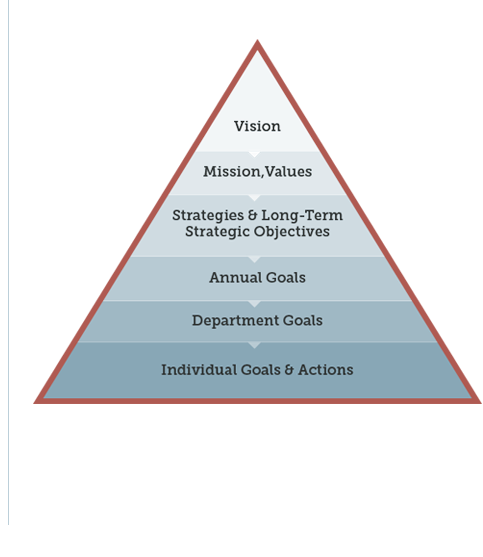
Career progression in social work Supporting vulnerable children, adults, and families is a unique and satisfying aspect of the social work profession. You will have the required paperwork to work as a social worker once you have earned your certification. Your undergraduate degree and finishing the required training and registration should also be included. After involving in social work, how do you want to achieve the career progression? If you are dwelling in this thought, you have landed to a right place. Also read: How skills affect career choice? As a social worker in practice, you might be interested in the potential for professional growth and the procedures you should take to ensure seamless advancement. There are various ways to improve your skills and chances of advancement in the list that follows. 1. Choose your work crew Decide whatever field of social work you enjoy working in the most or the specific population you want to achieve progression in your career as possible. Also read: How to improve career progression? To find your niche, you might occasionally need to gain experience on various teams. But switching teams repeatedly makes you a master of nothing and a jack of all crafts. To gain an understanding of how other teams operate, look for shadowing opportunities. Your decision will largely be influenced by your enthusiasm, experience, and professional goals. 2. Expand Your Network of Professionals A wonderful approach to advance in your social work career is by networking. Finding out more details from experts in the field might be helpful when deciding which area of social work you want to specialize in. Speaking with active professionals will enable you to learn about the position firsthand. You may create a network of like-minded individuals both online and offline. Also read: 7 Tips to Manage Your LinkedIn Profile Because a network is based on mutual respect, trust, and objectives, it takes time to establish one. Your personal network ought to offer members of the network win-win scenarios. This implies that everyone in your network needs to be able, willing, and ready to actively help one another. Join a professional network website like LinkedIn so you may connect with other professionals and gain knowledge. Investigate career requirements and potential using online tools. Attend professional workshops and career fairs to gain insight into the many practice areas. 3. Education and Training Investing in training and development is a very efficient strategy to advance your social work knowledge and abilities. It benefits you to get better at the things you’re not good at or don’t have the appropriate knowledge and experience for. Also go through Is Higher Salary Worth Relocating? – AESN Your hard and soft abilities are enriched and improved as a result. Although formal courses come to mind when we hear the word “training,” there are other ways to acquire knowledge, including: Watching YouTube videos Learning from coworkers Attending professional events like conferences and workshops Using free online training resources (SCIE) Reading books Listening to podcasts. Participate in webinars 4. Making Your Professional Vision Your vision lays the groundwork for success by illustrating where you want to go in your professional life. Spend some time reflecting about your life’s goals, aspirations, and wishes. Allow yourself to imagine your ideal work life in vivid detail. Think about the people you want to assist, the clothes you want to wear, the hours you want to work, and the setting you want to work in. Decide who you are and what matters to you. Discover who you are by learning about your personality and experiences, including what you enjoy and dislike. Also, decide what you want to become and where you want to go. In essence, make a plan. Consider the ideal group of people you would like to work with and assist on a daily basis when considering your career. Go through Before You Quit Your Job, Ask Yourself These Questions – AESN 5. Consider your private life It’s crucial since it affects both your personal and professional life. This is crucial because achieving a healthy work-life balance requires that your personal and professional lives mesh well together. Hopefully, at this point, everything is going according to plan and you are starting to have a very clear vision of the ideal personal and professional life you desire. 6. Creating Goals from Your Vision You can outline a list of goals with the aid of a clear visionary image and mindset. Convert these objectives into SMART statements (Specific, Measurable, Attainable, Realistic and Timely). By doing this, you’ll succeed and stay organized. Read: 5 Ways to Earn Side Income – AESN 7.  Write a formal mission statement Make a mission statement as the next step in building a fulfilling career. Your ability to see clearly will help you create the ideal professional mission. • A mission statement is crucial for professional development because it gives you direction and a goal for your actions. Dream it, Believe it, Achieve It is Social Work Haven’s mission statement. This assists in guiding our behavior. Our actions will include offering our readers practical tools to assist them in achieving their objectives since we want to help make dreams come true. Your aims, activities, and remarks should all be guided by your professional mission statement. Moreover, it will help you go where you want to go more quickly.  8. Taking Initiative Taking action is the last step. Seize the possibilities that present themselves. Always keep in mind to “be a student and not a follower.” This implies that you shouldn’t just follow orders. Take someone’s words seriously, but before making a choice or decision, discuss, think about, and weigh them from all sides. Display bravery as you work toward your stated objectives. Enjoy every moment of this journey fearlessly while keeping the goal in mind. You might want to read Here’s Why Networking Is Important for your Success – AESN Conclusion In conclusion, if you follow these recommendations, you’ll be able to achieve your objectives and build the successful, progression

successful registration

User registered. Verify your email by clicking on the link sent to your email.